Safety in a world that never stops spinning
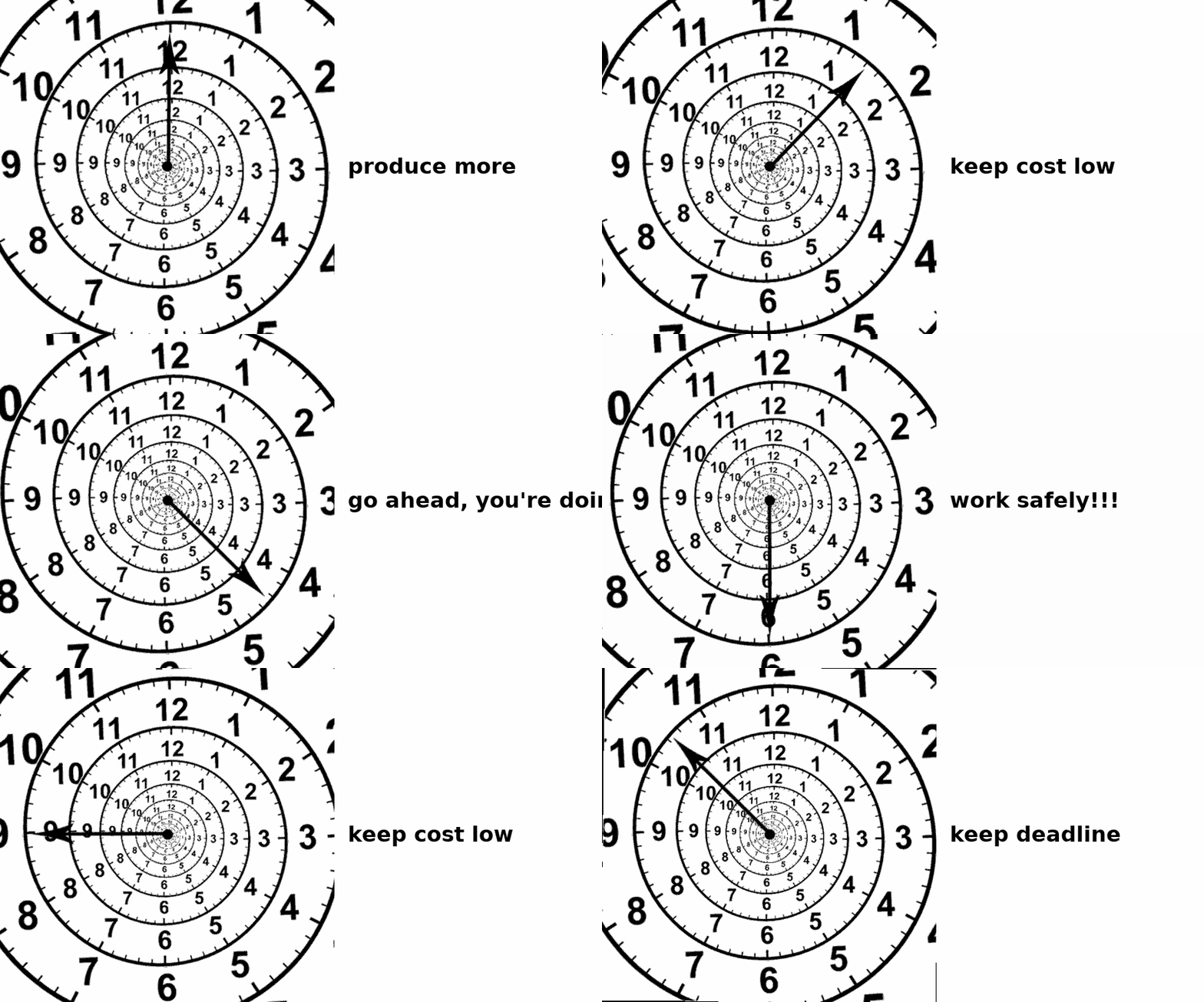
We often talk about safety as if organisations simply have clear purposes. We use slogans like Zero Harm, Safety First, or Everyone Gets Home Safe Today. But purposes aren’t stable objects, and they’re not fixed end states either. They’re certainly not timeless truths. Purposes are just temporary commitments people and organisations make to manage complexity together.
Traditional safety thinking treats individual actions as rational if they serve a purpose. But this overlooks that action only makes sense within a system. The system itself only exists through the ongoing flow of action, while it’s trying to maintain its identity in a constantly changing environment. This is why systems thinking matters; it helps us see how people, relationships and structures influence each other over time.
𝐂𝐚𝐮𝐬𝐞 𝐚𝐧𝐝 𝐞𝐟𝐟𝐞𝐜𝐭 𝐚𝐫𝐞 𝐬𝐢𝐦𝐩𝐥𝐢𝐟𝐢𝐜𝐚𝐭𝐢𝐨𝐧𝐬
Multiple causes can lead to the same incident. The same cause can lead to different outcomes, depending on context. It’s an error to see causality as a property of the world. It’s rather a cognitive strategy for reducing complexity so we can act. Systems thinking accepts this and stops pretending investigations reveal the one-and-only truth.
𝐕𝐚𝐥𝐮𝐞𝐬 𝐚𝐥𝐰𝐚𝐲𝐬 𝐜𝐥𝐚𝐬𝐡 𝐚𝐧𝐝 𝐬𝐚𝐟𝐞𝐭𝐲 𝐢𝐬 𝐨𝐧𝐞 𝐯𝐚𝐥𝐮𝐞 𝐚𝐦𝐨𝐧𝐠 𝐦𝐚𝐧𝐲
Every decision touches production, cost, speed, convenience, and safety at once. A rigid value hierarchy such as ‘safety above all’ collapses under real operational conditions. Systems thinking acknowledges that organisations constantly neutralise some values to pursue others, then move back again as circumstances change.
𝐏𝐮𝐫𝐩𝐨𝐬𝐞 𝐢𝐬 𝐚 𝐩𝐫𝐚𝐜𝐭𝐢𝐜𝐚𝐥 𝐨𝐫𝐢𝐞𝐧𝐭𝐚𝐭𝐢𝐨𝐧
Safety goals don’t describe a true future state. They help people focus attention, justify choices, and coordinate action over time. Systems thinking reframes purpose as a practical way of simplifying both causal options and value conflicts, so that organisations and the people in them can act.
When we see safety as something that emerges from the whole social system instead of just from slogans or individual behaviours, everything changes. Investigations become learning tools instead of blame hunts. Safety performance becomes about adaptation instead of just compliance. Leadership focuses on improving the system instead of correcting workers. Systems are time-sensitive. Priorities shift, conditions drift, and the system must continually recalibrate.
𝐂𝐨𝐧𝐜𝐥𝐮𝐬𝐢𝐨𝐧
Systems thinking gives safety back its realism. Organisations survive by constantly reducing complexity instead of by discovering timeless truths. Systems thinking shows that people, practices and structures come together to make decisions, trade-offs and commitments; always in motion, always under changing pressures, just like that endlessly spinning clock.